


Smartphones have become an essential part of modern life. Over the past decade, they’ve transformed from simple communication devices into powerful computing platforms that organize our day, entertain us, help us work, and even support our health. But as impressive as today’s smartphones are, the next generation promises even greater innovation.
From radical hardware designs and advanced artificial intelligence to immersive connectivity and health-centric features, the future of smartphones will look very different from what most of us carry today. Let’s explore the major trends and advancements that are set to reshape the smartphone landscape in the coming years.
1. AI at the Core: Smarter, Context-Aware Experiences
Artificial intelligence is already part of many smartphone experiences—from voice assistants to camera enhancements. But the coming wave of AI integration will be far more profound.
AI That Understands You
Future smartphones will use AI to understand context, habits, and user preferences in real time. Instead of waiting for commands, devices could anticipate needs:
- Suggesting replies based on ongoing conversations
- Automatically organizing schedules and content
- Recognizing patterns in work and play to optimize performance
This context awareness will make smartphones feel less like tools and more like personalized assistants.
On-Device AI Processing
Privacy and speed will drive AI to run locally on devices rather than relying on cloud servers. On-device AI means faster responses, reduced latency, and better privacy protections, since sensitive data stays on your phone.
2. Next-Level Displays and Interaction
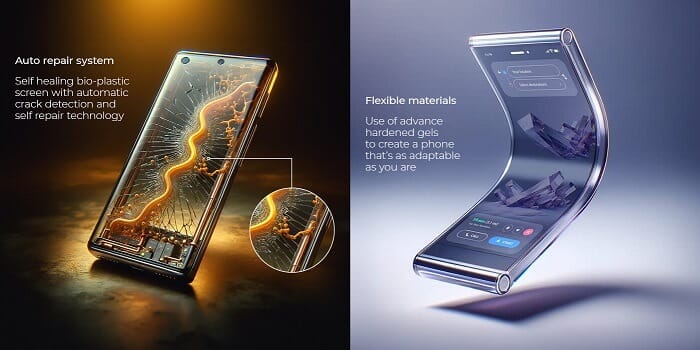
The evolution of displays continues to push boundaries, but upcoming innovations promise to change how we interact with screens.
Foldable and Rollable Screens
Foldable smartphones have already hit the market, but future devices will take this further with rollable and expandable screens that adapt to different use cases. Imagine a phone that’s pocket-sized but expands into a large tablet-like display when needed.
These flexible screens will enhance multitasking, improve media consumption, and unlock new kinds of user interfaces.
Advanced Haptics and Touch Feedback
Enhanced haptic systems will simulate textures, resistance, and real-world sensations on the screen. This tactile feedback will make typing, gaming, and navigating more intuitive and immersive.
Gesture and Eye Tracking
Future phones may use gesture and eye movement tracking to navigate without touching the screen. These features could be especially useful when hands-free interaction is preferred or necessary.
3. Cameras That See Beyond Reality
Smartphone cameras have become a major battleground for innovation, and the next generation will redefine what’s possible at the intersection of hardware and AI.
Computational Photography 2.0
AI-driven photography will go beyond noise reduction and HDR—future systems will understand scenes, lighting, and subjects deeply enough to recreate visuals that rival professional cameras.
Features may include:
- 3D photo capture that preserves depth and perspective
- Real-time editing filters powered by AI reasoning
- Enhanced low-light and motion capture modes
Multi-Spectrum Imaging
Beyond visible light, future smartphones may capture infrared, ultraviolet, or depth data, enabling new use cases like health monitoring, material analysis, and augmented reality (AR) experiences.
4. Batteries, Charging, and Power Optimization
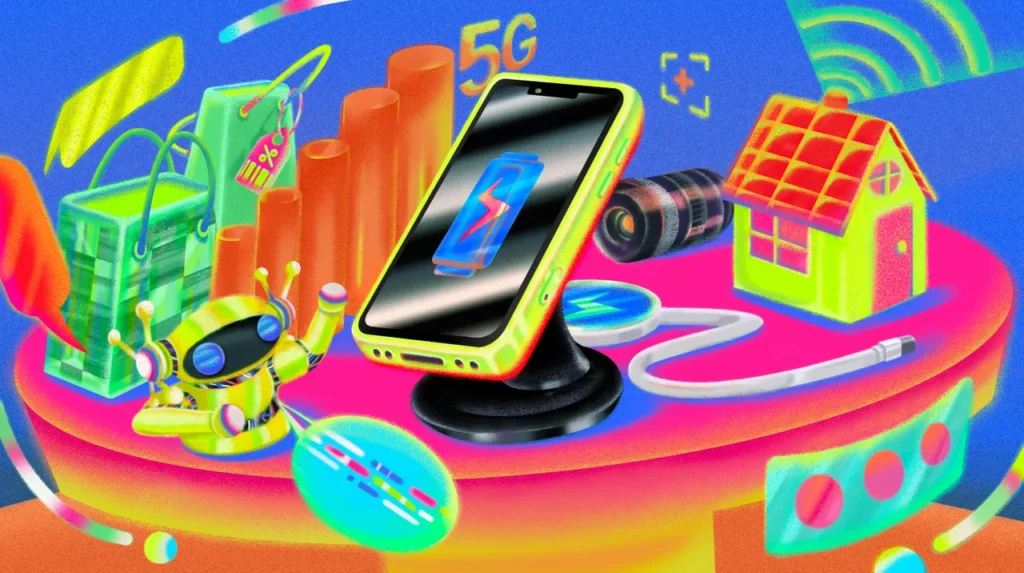
Battery life remains one of the biggest constraints for mobile users. Innovations are on the horizon that could not only extend battery life but also change how we think about charging.
Solid-State Batteries
Solid-state battery technology promises higher energy density, faster charging, and improved safety compared to today’s lithium-ion cells. These batteries could dramatically extend usage time while reducing weight and overheating issues.
Advanced Power Management
Future smartphones will leverage AI to manage power dynamically, allocating energy where it’s needed most and adapting to user habits to maximize uptime.
Wireless and Ambient Charging
Devices may soon charge automatically when in proximity to wireless charging surfaces—no plugs required. Imagine walking into a room and having your phone top up continuously without placing it on a pad.
5. Connectivity Beyond 5G
Ultra-fast connectivity has become a standard expectation, but the future will redefine what “connected” really means.
6G and Beyond
While 5G is still rolling out globally, researchers are already working on 6G technology. Although exact standards are still emerging, 6G promises even higher speeds, ultra-low latency, and greater reliability, enabling real-time cloud computing, holographic conferencing, and advanced AR/VR experiences.
Satellite Integration
Smartphones with direct satellite connectivity will make coverage truly global. No longer dependent on cell towers, users will be reachable from remote locations—ideal for travel, emergency situations, and underserved regions.
6. Augmented Reality: Blending Digital and Physical Worlds
Augmented reality is no longer science fiction. With improved processing power and AI, smartphones are becoming powerful AR platforms.
Context-Aware AR
Future devices will overlay useful digital information on the physical world in real time—for navigation, education, shopping, interior design, and social interaction.
Mixed Reality Experiences
With AR glasses and headsets becoming more mainstream, smartphones may act as hubs that connect and power extended reality experiences, seamlessly shifting between screens, environments, and user interfaces.
7. Security That Scales With Innovation
As smartphones become more intelligent and interconnected, security becomes even more crucial. Future innovations will focus on protecting not just data, but identity and behavior.
Biometric Advances
Beyond fingerprints and face recognition, upcoming devices may use behavioral biometrics—how you type, walk, or hold your phone—to authenticate users continuously and seamlessly.
Hardware-Level Security
Secure enclaves and dedicated security chips will protect sensitive operations like authentication, machine learning processing, and encrypted communication, making devices more resilient to attacks.
8. Health and Wellness Monitoring
Smartphones are poised to become personal health companions, moving beyond simple step tracking to meaningful, clinical-grade insights.
Advanced Health Sensors
Built-in sensors could monitor heart rate, blood oxygen, stress signals, and even early indicators of health conditions. With AI analysis, phones may alert users to anomalies or trends that warrant attention.
Mental Well-Being Support
With context-aware intelligence, smartphones could detect signs of stress, irregular sleep patterns, or changes in behavior—and offer timely suggestions to improve well-being.
9. Sustainability and Modular Design
As environmental awareness grows, phone manufacturers are exploring ways to make devices more eco-friendly.
Modular Components
Future phones could be designed so that individual components—like cameras, batteries, or storage—can be easily upgraded without replacing the entire device.
Recycled Materials and Repairability
Sustainability efforts will focus on eco-friendly materials, repairability, and programs that extend device lifespans.
10. What All This Means for Users
So what do these innovations mean for everyday smartphone users?
- Smarter experiences that understand your context, anticipate needs, and reduce friction
- Faster connectivity and more robust global coverage
- Health insights and wellness tools that keep you informed
- Immersive digital experiences that blend the physical and virtual worlds
- Longer battery life and seamless charging
- Enhanced privacy and security that keep data safe without slowing you down
The future smartphone is no longer just a pocket computer—it’s an intelligent companion that learns, adapts, and enhances life in ways we’re only beginning to imagine.
Final Thoughts
Smartphone innovation is entering a new era. What began as a device for calls and texts has evolved into a central hub for communication, creation, health, and connection. The next wave of advancements promises to make phones more intuitive, powerful, and indispensable than ever.
Whether you’re a tech enthusiast, a developer, or a casual user, the coming years will deliver remarkable changes to the devices we carry every day. The smartphone of the future won’t just keep up with life—it will help shape it.