

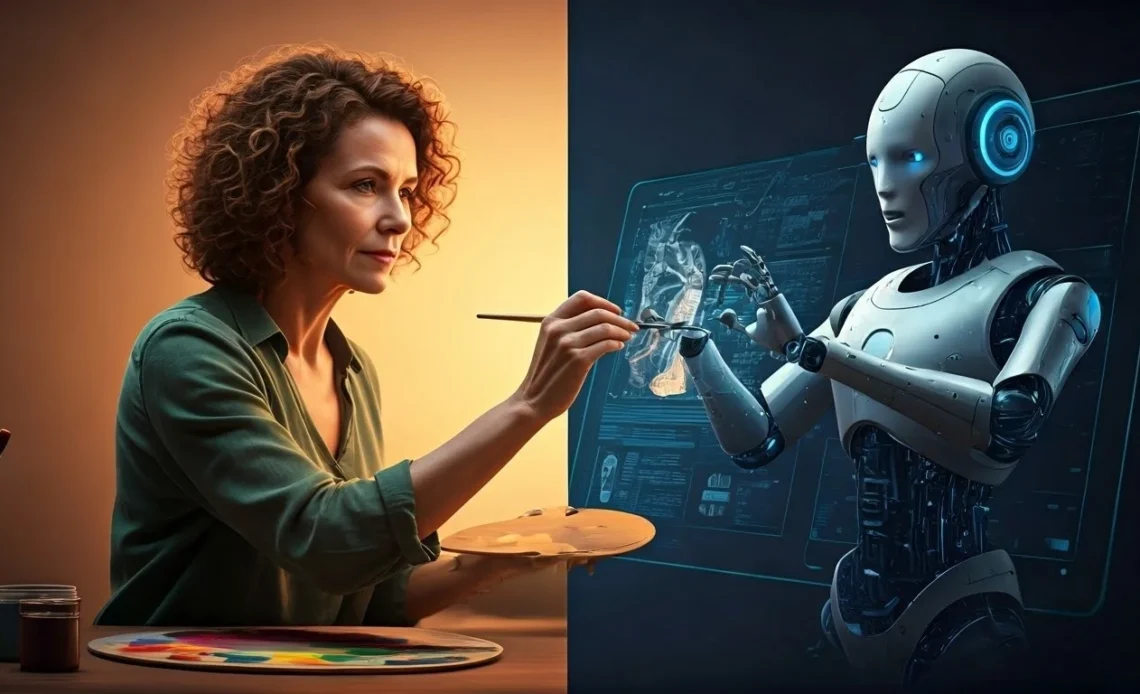
Artificial Intelligence (AI) has become a hot topic in creative fields, from art and music to writing, design, and marketing. With tools capable of generating text, images, music, and even code, a common question arises: Is AI replacing human creativity, or is it enhancing it?
The answer is nuanced. AI is neither inherently a replacement for humans nor a purely creative entity on its own. Its role depends on how it is used — as a tool, a collaborator, or a shortcut. This article explores the impact of AI on creativity, the opportunities it offers, and the challenges it presents.
1. Understanding AI Creativity
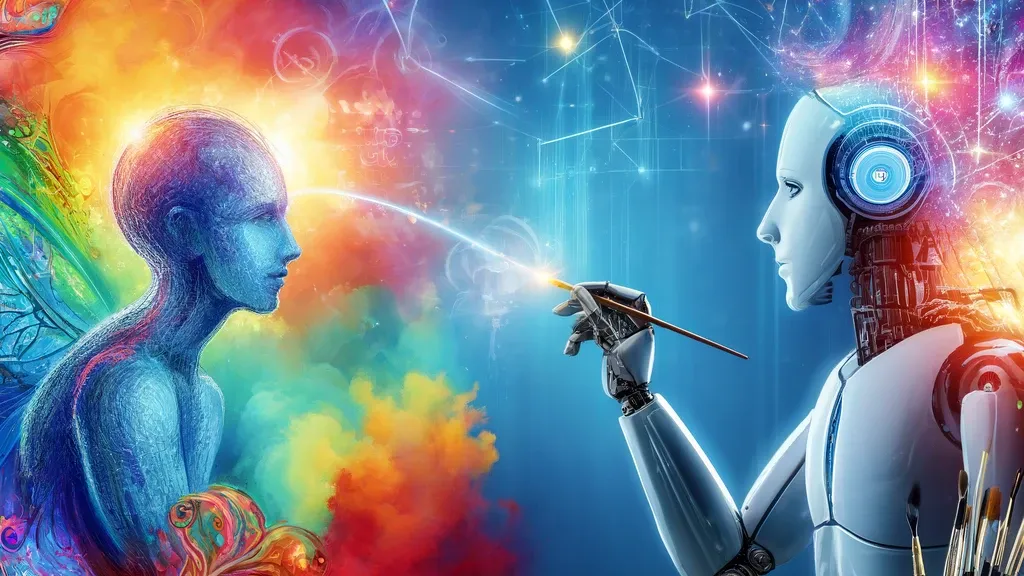
Before diving into whether AI is replacing humans, it’s important to understand what AI creativity is. AI generates content by analyzing massive datasets, identifying patterns, and producing outputs based on those patterns. It does not possess emotions, consciousness, or lived experiences — elements that traditionally define human creativity.
Examples of AI creativity:
- AI-generated art: Tools like DALL·E or MidJourney create images from text prompts.
- AI music composition: Platforms like AIVA or Amper can compose melodies or full tracks.
- AI writing assistants: ChatGPT or Jasper can draft blog posts, product descriptions, or short stories.
In all cases, AI relies on existing data. It can remix, reimagine, or extend concepts but does not originate ideas from lived human experience. This distinction is crucial when evaluating whether it replaces or enhances creativity.
2. AI as a Creative Collaborator
One of the most compelling roles of AI is as a collaborator rather than a replacement. It can amplify human creativity by handling repetitive or technical tasks, providing inspiration, and speeding up experimentation.
Examples:
- Design: A graphic designer can use AI to generate multiple visual concepts quickly, then select and refine the best ones. AI handles iterations, while the designer applies aesthetic judgment.
- Writing: Authors can use AI to brainstorm ideas, generate dialogue, or create drafts faster. The human author decides on tone, theme, and final structure.
- Music: AI-generated melodies can serve as starting points, which musicians refine into full compositions.
Benefit: AI can reduce the time spent on tedious tasks, allowing humans to focus on higher-level creative decisions.
3. Enhancing Accessibility to Creativity
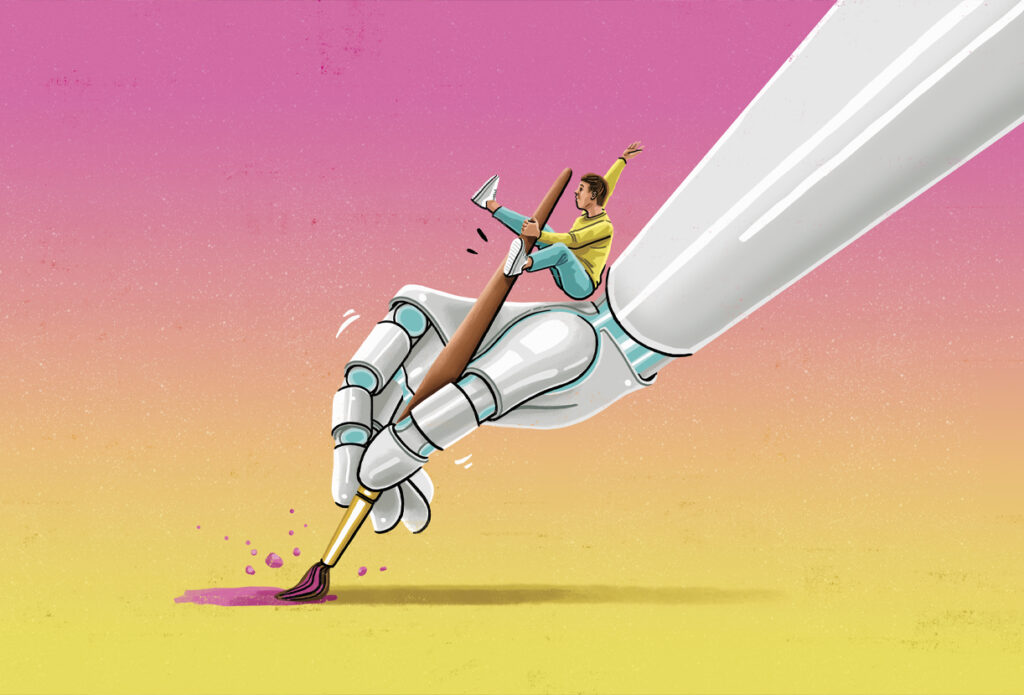
AI is also democratizing creativity. Tools that were once reserved for trained professionals are now accessible to anyone with a computer or smartphone.
Examples:
- Non-designers can create professional-quality visuals using Canva’s AI tools.
- Hobbyist writers can draft stories or scripts using AI assistants.
- Small businesses can generate marketing content without hiring a full creative team.
Impact: AI lowers barriers to entry, giving more people the ability to experiment creatively and express themselves. While it may produce content that looks professional, the unique perspective of a human creator is still irreplaceable.
4. Risks of Overreliance on AI
While AI can enhance creativity, overreliance can stifle original thinking. If humans use AI as a crutch rather than a tool, work may become formulaic or derivative.
Potential risks:
- Homogenization: AI trained on existing works may produce content that looks similar across users, limiting diversity.
- Loss of skill development: Relying too much on AI for writing, design, or music may reduce practice and growth in those skills.
- Ethical concerns: AI-generated content may inadvertently copy copyrighted material or perpetuate biases.
Example: A marketer using AI to generate hundreds of social media posts might produce content quickly, but it risks lacking the authentic brand voice that resonates with audiences.
5. Where AI Truly Enhances Human Creativity
AI excels when used to augment, inspire, or experiment rather than replace human insight. Here’s how it enhances creativity:
- Idea Generation: AI can provide dozens of prompts, concepts, or variations quickly.
- Example: A game developer uses AI to generate multiple character designs and story arcs.
- Rapid Prototyping: AI can create drafts, sketches, or mockups that speed up the creative process.
- Example: An interior designer uses AI to visualize different layouts for clients before manual refinement.
- Data-Driven Creativity: AI can analyze patterns, trends, or audience preferences, helping creators tailor their work.
- Example: A songwriter uses AI insights from streaming data to refine melodies that appeal to target audiences.
- Expanding Boundaries: AI can combine ideas in novel ways humans may not have considered.
- Example: Generative AI merges surreal art styles with modern graphic design for innovative visuals.
6. Case Studies in Creative Collaboration
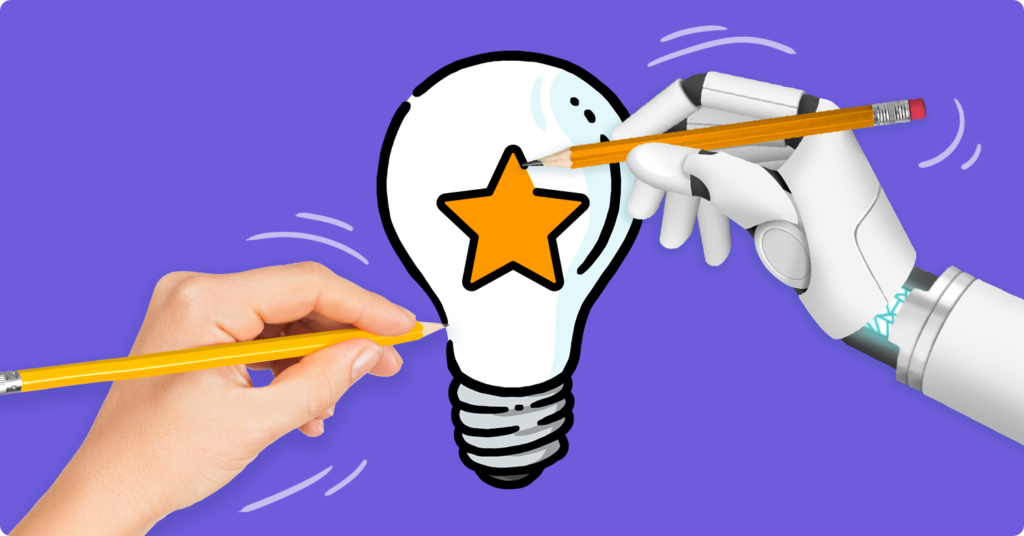
Example 1: Film and Animation
AI tools can generate storyboards or scene concepts. Filmmakers can then refine visuals, camera angles, and storytelling nuances. The AI speeds up pre-production but does not replace human vision.
Example 2: Fashion Design
AI generates clothing patterns and trend forecasts. Designers select materials, color palettes, and final styles, blending AI suggestions with their creative intuition.
Example 3: Marketing and Advertising
Brands use AI to draft multiple ad copies quickly. Marketers then test, adapt, and craft campaigns that resonate with audiences — a combination of AI efficiency and human creativity.
7. AI and the Future of Creativity
The future of creativity is likely to be collaborative rather than competitive between humans and AI. Instead of asking “Is AI replacing human creativity?” we should ask:
- How can AI amplify human ideas?
- How can humans apply judgment and intuition to AI outputs?
- How can AI reduce repetitive burdens to free time for deeper creative thinking?
As AI tools evolve, humans may focus more on conceptual, emotional, and ethical aspects of creative work, while AI handles scale, iteration, and experimentation.
8. Best Practices for Using AI Creatively
To ensure AI enhances rather than replaces creativity:
- Use AI as a partner, not a crutch: Let AI suggest, you decide.
- Blend human insight with AI outputs: Refine and add personal perspective.
- Experiment with prompts and variations: Explore AI’s full potential for inspiration.
- Maintain skill development: Continue practicing core creative skills manually.
- Ensure ethical and original work: Avoid blindly using AI outputs without review.
Conclusion
AI is transforming creativity, but it is not replacing the human spark. Its true power lies in enhancing human potential, automating repetitive tasks, inspiring ideas, and enabling experimentation at scale. Human judgment, emotion, and unique perspective remain irreplaceable.
Ultimately, creativity is evolving into a collaborative dance between humans and machines, where the best results emerge when humans guide AI with intention, insight, and imagination. The future isn’t about AI versus humans — it’s about AI with humans, amplifying what we can create.