

The rise of artificial intelligence has brought an explosion of “free” AI tools. From chatbots and content generators to image creators and productivity assistants, many of these tools promise to make life easier at no cost. On the surface, it seems like a win-win: you get access to powerful AI capabilities without paying a dime.
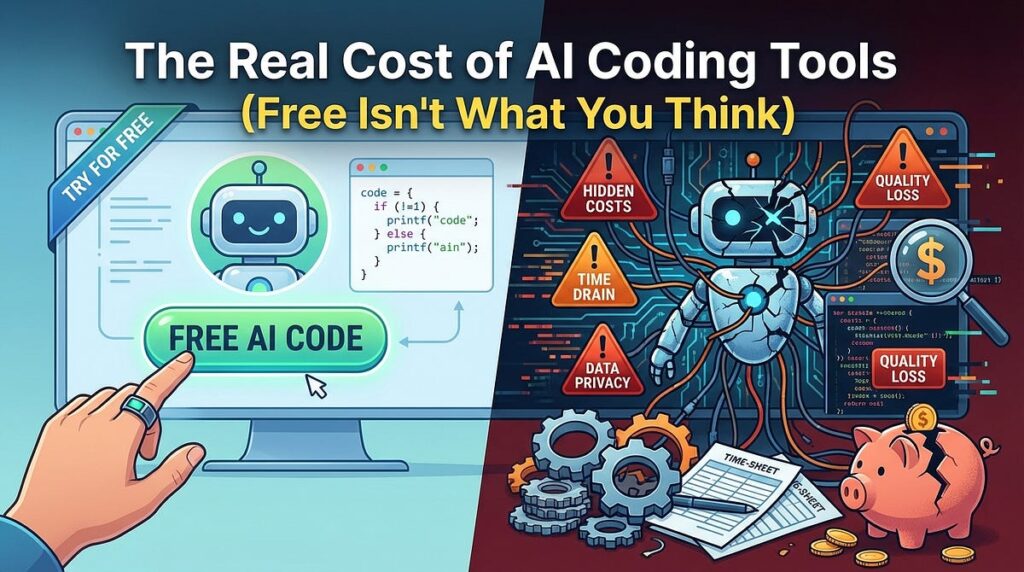
However, as the saying goes, “there’s no such thing as a free lunch.” Free AI tools often come with hidden costs—some obvious, others less apparent. Understanding these costs is crucial for individuals and businesses alike to use AI safely, effectively, and responsibly.
1. Privacy and Data Security Risks

Most free AI tools require access to some form of personal or organizational data. In exchange for being “free,” users often provide consent for the tool to collect, store, or analyze this data.
Examples:
- Chatbots may store your conversations to improve their models.
- AI writing assistants can retain and analyze your input text for training purposes.
- AI image generators may log the prompts and generated images, which could be used to refine their algorithms or even shared publicly.
Hidden Cost: Users may unknowingly sacrifice privacy, exposing sensitive personal or business information to third parties. This risk is particularly concerning for professionals handling confidential client data or proprietary content.
2. Limited Functionality and Usage Caps
Free AI tools often come with restrictions that are easy to overlook. These limitations can affect productivity and efficiency.
Examples:
- Some AI writing tools limit the number of words or prompts per day.
- AI design platforms may restrict downloads or high-resolution outputs.
- Free tiers may lack access to advanced features such as custom training, analytics, or integrations.
Hidden Cost: While the tool is “free,” it may slow down your workflow or force you to pay for premium features to meet real needs, costing time and money indirectly.
3. Advertisements and Upselling
Many free AI platforms rely on ads or in-app promotions to generate revenue. While subtle, this can influence how the tool is presented and how you use it.
Examples:
- Free AI apps may prompt you repeatedly to upgrade to premium tiers.
- Some free tools insert promotional content into outputs, like watermarks on AI-generated images.
Hidden Cost: Constant exposure to advertisements can be distracting, reduce efficiency, and may push users toward spending money they didn’t initially plan to.
4. Data Ownership and Intellectual Property Concerns

When using free AI tools, the question of who owns the output can become murky. Some free platforms retain rights to content you create using their tools, or they may include licensing clauses that allow them to reuse or display your content.
Examples:
- Free AI art generators may claim rights to images created with their tool.
- AI content generators may store written text and use it to train models for other users.
Hidden Cost: This can be particularly concerning for businesses or creators producing proprietary content, as using free tools might limit your ability to fully control or monetize your work.
5. Hidden Time Costs
While free AI tools may save money, they can consume more time than expected due to limitations, learning curves, or reduced support.
Examples:
- Free tools may have slower processing speeds or longer wait times for results.
- Lack of customer support can make troubleshooting difficult.
- Limited documentation or tutorials can increase the time needed to use the tool effectively.
Hidden Cost: The time you spend navigating limitations or troubleshooting could outweigh the cost savings, especially in a professional setting.
6. Reliability and Accuracy Issues
Free AI tools are often less robust than paid alternatives. This can lead to errors, incomplete outputs, or outputs that require additional human review.
Examples:
- Free AI writing tools may produce grammatically correct but contextually inaccurate text.
- Free AI chatbots may fail to understand complex queries or provide inconsistent responses.
- Free AI coding assistants might generate incomplete or inefficient code.
Hidden Cost: Time and effort spent correcting AI mistakes can reduce productivity and even damage credibility in professional contexts.
7. Security Vulnerabilities
Free AI tools, especially those hosted online, can sometimes have weak security measures. Without dedicated support and updates, they may be more susceptible to hacking or malicious exploitation.
Examples:
- Free AI image generators storing user data without encryption.
- AI tools hosted on insecure servers that could leak sensitive information.
Hidden Cost: Using free tools for sensitive work increases the risk of cyberattacks and data breaches, which can have serious financial and reputational consequences.
8. Opportunity Costs
Relying on free AI tools may prevent you from exploring better, paid alternatives that offer higher efficiency, security, or customization.
Examples:
- A free AI content generator might save money short-term but produce outputs that require heavy editing, whereas a paid tool could deliver polished results faster.
- Free AI project management assistants may lack integration features, requiring manual workarounds.
Hidden Cost: The hidden cost is the lost time, efficiency, or potential revenue you might have gained by using a premium tool suited to your needs.
9. Ethical Implications
Some free AI tools use data from users to train models that are sold or used commercially. By using the tool, users may unknowingly contribute to ethical issues such as data exploitation, bias reinforcement, or content replication.
Examples:
- AI art platforms using uploaded artworks to train models without explicit permission from artists.
- Free AI writing tools leveraging user text to improve proprietary language models.
Hidden Cost: Users may inadvertently support practices that conflict with their values or industry standards.
How to Navigate Free AI Tools Safely
Despite these hidden costs, free AI tools can still be valuable if used wisely. Here are some tips:
- Read Terms and Privacy Policies: Understand how your data and outputs are used.
- Limit Sensitive Data: Avoid uploading confidential or proprietary information to free platforms.
- Test Before Full Use: Start with small tasks to evaluate reliability and limitations.
- Compare Alternatives: Consider whether a paid option might save time or reduce risk in the long term.
- Keep Backups: Always save copies of AI outputs independently to prevent data loss or licensing issues.
Example: A freelance designer might use a free AI image tool for brainstorming but finalize work in a paid platform that offers higher resolution, commercial rights, and better privacy.
Conclusion
Free AI tools have opened up incredible opportunities for individuals, businesses, and creators. They provide accessibility, convenience, and a low barrier to entry for exploring AI’s potential.
However, the true cost of “free” AI tools often goes beyond money. Privacy risks, limited functionality, time delays, ethical concerns, and data ownership issues are hidden costs that users must consider.
The key is to use free AI tools strategically, complement them with human judgment, and evaluate when paying for premium features or alternatives is worth the investment. By being informed and cautious, you can enjoy the benefits of AI without falling prey to its hidden costs.