


Learning a new language is both exciting and challenging. Whether you want to travel, expand career opportunities, or connect with people worldwide, mastering a language can open countless doors. Traditionally, learning a language involved classrooms, textbooks, and repetitive drills. While effective in some ways, these methods often lack flexibility, personalization, and real-world practice.
With the rise of artificial intelligence (AI), language learning has entered a new era. AI-powered apps adapt to learners’ needs, provide instant feedback, and simulate real-life conversations. In this post, we explore the key differences between AI language learning apps and traditional methods, including real examples, strengths, weaknesses, and best use cases.
📚 Traditional Language Learning
Traditional methods are still widely used in schools, universities, and language centers. They usually include:
- Classroom instruction with a teacher
- Textbooks and workbooks for grammar and vocabulary
- Drills, exercises, and tests for reinforcement
- Scheduled homework assignments
Strengths
- Structured learning: Covers grammar, vocabulary, and pronunciation systematically.
- Live interaction: Students can practice speaking and listening with teachers and classmates.
- Accountability: Regular classes and homework keep learners on track.
Limitations
- Fixed pace may be too slow or too fast for individual learners.
- Limited opportunities to practice outside class hours.
- Often lacks real-world conversational context.
Example
- Rosetta Stone: A classic traditional-style program that emphasizes immersive learning through structured lessons. It introduces grammar and vocabulary gradually and provides some speech recognition exercises, but learners follow a fixed syllabus with minimal personalization.
🤖 AI-Powered Language Learning Apps
AI-driven apps take personalization, engagement, and flexibility to the next level.
How AI Apps Work
- Analyze your performance and adapt lessons to your strengths and weaknesses.
- Offer instant feedback on grammar, vocabulary, and pronunciation.
- Simulate real-life conversations and adjust difficulty dynamically.
- Use gamification to make learning fun and consistent.
Key Advantages
- Personalized learning paths: AI identifies your weaknesses and adjusts lessons accordingly.
- Instant correction: Receive immediate feedback on pronunciation, grammar, and usage.
- Flexibility: Learn anytime, anywhere, on your schedule.
- Engagement: Gamified exercises, streaks, and challenges keep motivation high.
Popular AI Language Learning Apps
- Duolingo: Uses AI to adapt lessons to your skill level and provides gamified exercises with points, streaks, and challenges.
- Babbel: Offers conversational practice and personalized review sessions powered by AI algorithms.
- Busuu: Combines AI exercises with feedback from native speakers, giving a mix of technology and social learning.
- LingQ: Tracks your reading and listening habits, recommending vocabulary and lessons based on your progress.
🧠 Personalized Learning in Action
Traditional classes follow a set curriculum, but AI apps adapt to your performance.
Example
Maria struggles with Spanish verb conjugations. On Duolingo, the AI notices she frequently answers incorrectly in this area. It then presents additional exercises targeting past and subjunctive tenses until she improves. Meanwhile, if she excels at vocabulary, the app accelerates to more advanced words.
This personalized approach saves time and keeps learners from getting frustrated or bored.
🎤 Real-Time Feedback and Speaking Practice
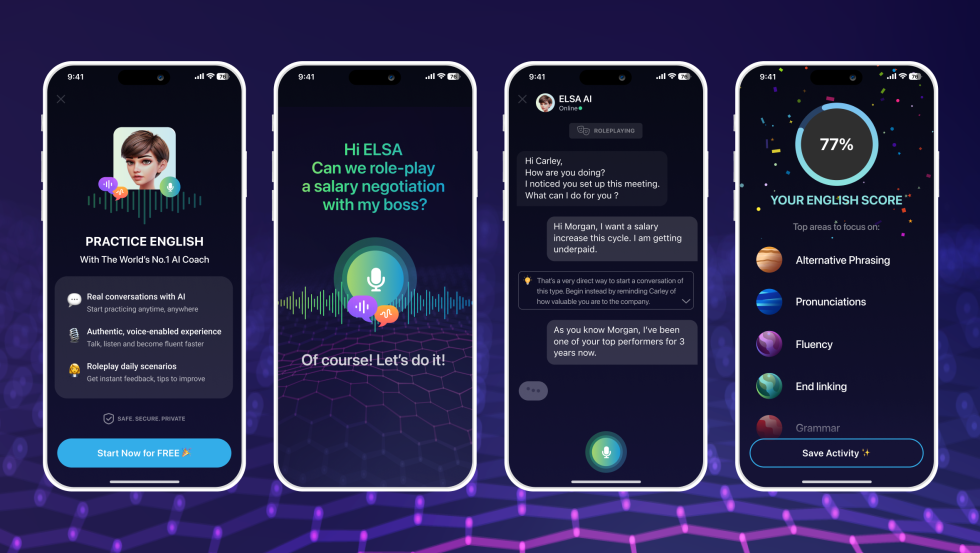
Speaking and listening are often the hardest skills to develop. AI apps provide opportunities that textbooks cannot.
Example
- Elsa Speak: Focuses on pronunciation. Using AI speech recognition, it highlights mispronounced sounds and gives targeted exercises.
- Busuu: Lets you record responses and receive corrections from native speakers or AI-powered algorithms.
Compared to traditional methods, learners can practice speaking anytime without fear of judgment and get precise, actionable feedback immediately.
📊 Gamification and Engagement
AI apps often integrate game-like features to make learning addictive. Points, streaks, badges, and levels encourage daily practice.
Example
- Duolingo’s leaderboard motivates users to complete daily exercises.
- LingQ uses a reward system for reading and listening practice.
These features increase consistency, which is crucial for long-term retention.
⚖️ AI vs Traditional: Side-by-Side
| Feature | Traditional Methods | AI Language Apps |
|---|---|---|
| Learning Path | Fixed curriculum | Adaptive and personalized |
| Feedback | Teacher-dependent | Instant and ongoing |
| Speaking Practice | Limited to class | 24/7 interactive conversations |
| Flexibility | Scheduled classes | Learn anytime, anywhere |
| Motivation | Relies on discipline | Gamification and AI prompts |
| Cultural Context | Strong | Improving, sometimes limited |
| Cost | Tuition or subscription | Free to subscription-based |
🧩 Hybrid Learning: Best of Both Worlds

Combining AI apps with traditional learning can be highly effective:
- Use AI apps daily for vocabulary, listening, and pronunciation practice.
- Attend weekly classes or tutoring for grammar and live conversation.
- Supplement with textbooks for structured grammar rules and writing exercises.
This hybrid approach leverages AI’s efficiency and personalization while maintaining the depth and cultural context of traditional learning.
📌 Real-World Learner Examples
Scenario 1: The Busy Professional
John travels frequently and struggles to attend weekly language classes. He uses Babbel and Duolingo during commutes and practice sessions, supplementing with occasional tutoring to improve conversation skills. AI adapts lessons to his skill level, keeping him progressing without disrupting his work schedule.
Scenario 2: The Student Preparing for Exams
Sofia prepares for a standardized Spanish exam. She combines Rosetta Stone for structured grammar practice with Elsa Speak for pronunciation and Duolingo for interactive daily exercises. The AI apps accelerate review, while traditional methods provide exam-focused structure.
Scenario 3: The Traveler
Alex wants to quickly learn conversational French before moving abroad. AI apps like Busuu simulate real-life dialogues and provide instant feedback, giving him confidence to communicate while interacting with locals.
⚠️ Limitations of AI Apps
While AI apps are powerful, they’re not perfect:
- Cultural nuance: AI might miss idioms, tone, or context in conversations.
- Human motivation: Some learners thrive on social interaction and accountability from teachers or classmates.
- Overreliance on technology: Without consistent usage, progress can stagnate.
🏁 Conclusion
AI-powered language learning apps have transformed the way people acquire new languages. With personalized lessons, instant feedback, real-time conversation practice, and gamification, they offer flexibility and efficiency that traditional methods cannot match.
Traditional learning still has value, especially for structured grammar instruction, cultural depth, and in-person interaction. However, combining both approaches can give learners the fastest, most engaging, and most effective route to fluency.
Whether you choose AI, traditional classes, or a hybrid method, the key is consistent practice, engagement, and real-world application. With these tools at your fingertips, learning a new language has never been more accessible or exciting.